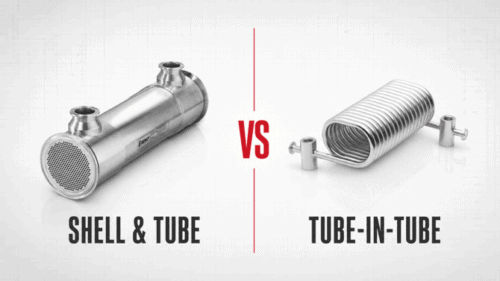
Tube-in-Tube vs. Shell-and-Tube Heat Exchangers
Choosing the right heat exchanger isn’t about which design is “better”—it’s about selecting the solution that best fits your process requirements. Every application has unique thermal, pressure, flow, and space constraints. At Exergy, we design both shell & tube and tube-in-tube heat exchangers, allowing us to recommend the right technology based on your operating conditions and performance goals—not on a single product offering.
Shell-and-Tube
A bundle of tubes enclosed in a shell, with fluids flowing through and across them.
-
Higher flow rates and larger heat duties
-
Industrial process heating and cooling
-
High temperatures, pressures, or phase changes
-
Complex operating conditions
Exergy application: Industries where uptime and consistent performance matter most, built for reliability and flexibility.
Tube-in-Tube
Concentric design—one tube inside another—typically arranged in counterflow.
-
Compact systems with limited space
-
Lower to moderate flow rates
-
Sanitary or cleanable applications
-
Fouling-risk services requiring easy access
Exergy application: Biotech, pharma, and specialty processes where cleanability, durability, and precise control are essential.
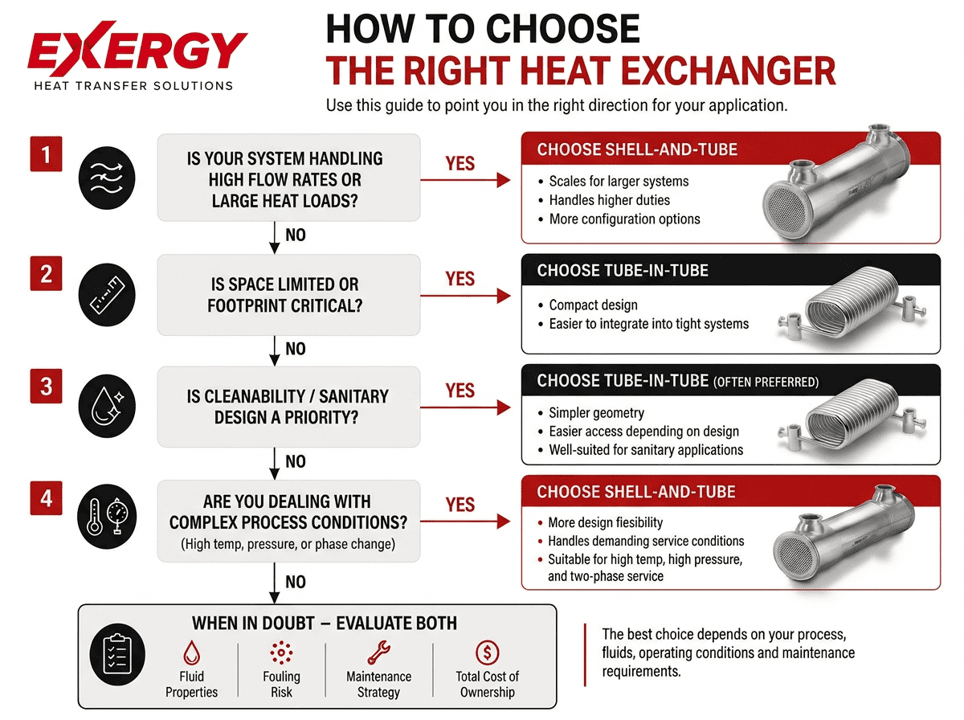
What Actually Drives the Decision
- Flow Rate & Heat Duty : Larger systems lean toward shell-and-tube; smaller, targeted applications may suit tube-in-tube.
- Space Constraints : Tube-in-tube is often easier to fit into tight layouts and cleanroom environments.
- Pressure & Temperature : Both designs can be engineered for high pressure and temperature—limits depend on design details, not type.
- Maintenance Strategy : Accessibility, cleanability, and downtime requirements often drive the decision as much as performance.
Real-World Example
A pharmaceutical manufacturer needed a compact solution for heating fluids in a cleanroom. Space was limited and sanitary requirements were strict. A tube-in-tube exchanger was selected—it fit the layout, was designed for drainability and sanitary connections, and handled the required temperature range without unnecessary complexity.