Applications
Bioprocessing Equipment
Provides precise heating and cooling for bioreactors, fermenters, and other critical processing equipment.
Purified Water & WFI Systems
Supports pharmaceutical water systems with reliable temperature control and hygienic performance.
CIP & SIP Processes
Delivers dependable heat transfer for clean-in-place and steam-in-place operations, maintaining sanitary integrity.
Product Heating & Cooling
Maintains precise product temperatures to ensure consistent quality and process control.
Vaccine & Biologics Manufacturing
Supports temperature-sensitive pharmaceutical and biologic production with hygienic, validated heat transfer solutions.
Filling & Packaging Systems
Provides reliable thermal control where product integrity is essential.
Compare sanitary designs to find the right fit for your process
Evaluate performance, cleanability, thermal flexibility, and process requirements
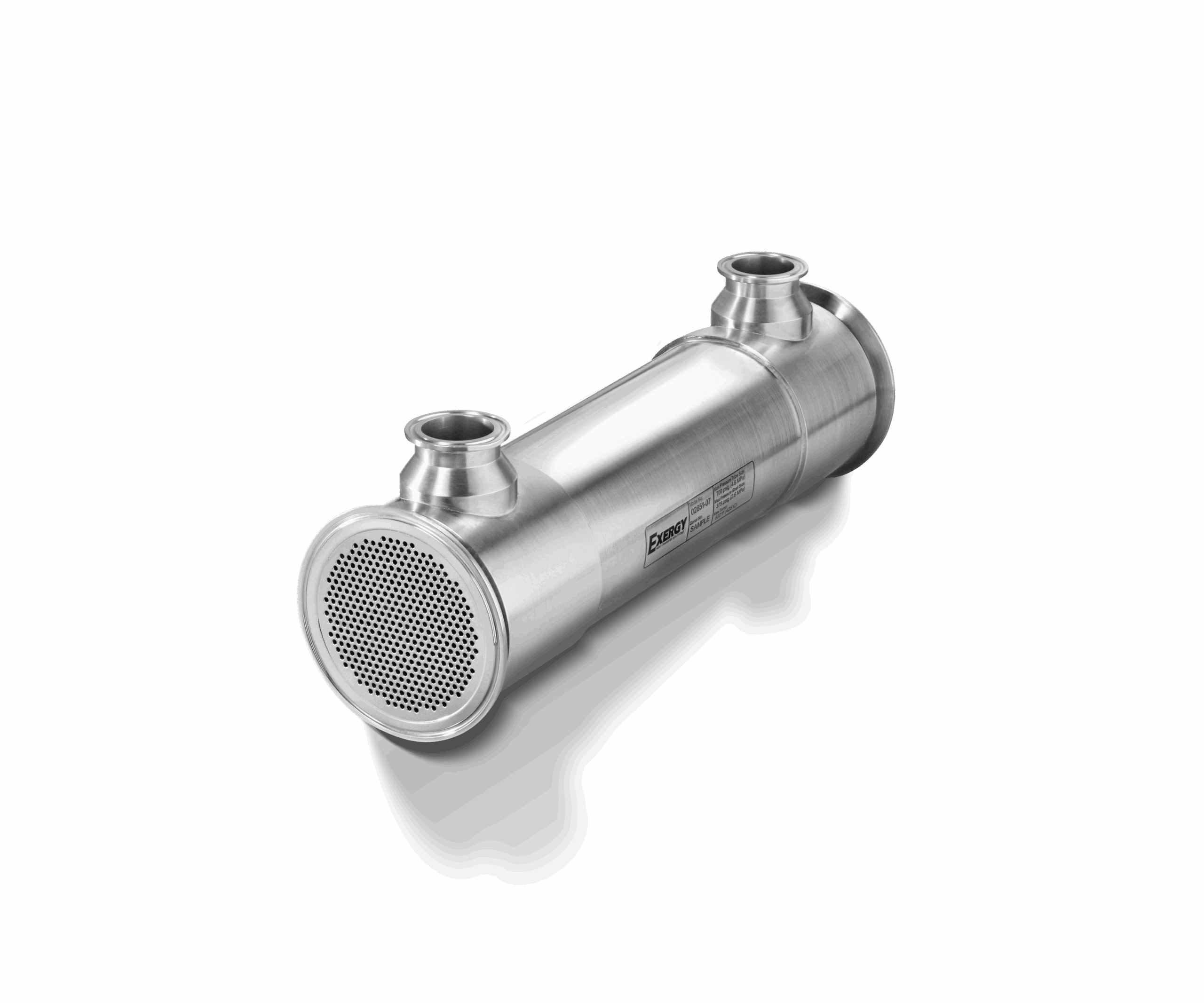
Sanitary Shell & Tube
Sanitary heat exchanger design for pharmaceutical and hygienic applications where compact efficiency, cleanability, and proven performance matter most.
- Hygienic Process Design – Ideal for WFI, CIP/SIP, and clean utility systems where cleanability and process integrity are critical.
- Compact Integration – Space-efficient design integrates easily into skids, OEM equipment, and space-constrained installations.
- Contamination Protection – Double tubesheet design provides added separation between process and utility fluids.
- High-Capacity Performance – High heat transfer efficiency for a variety of flow rates and heat loads.
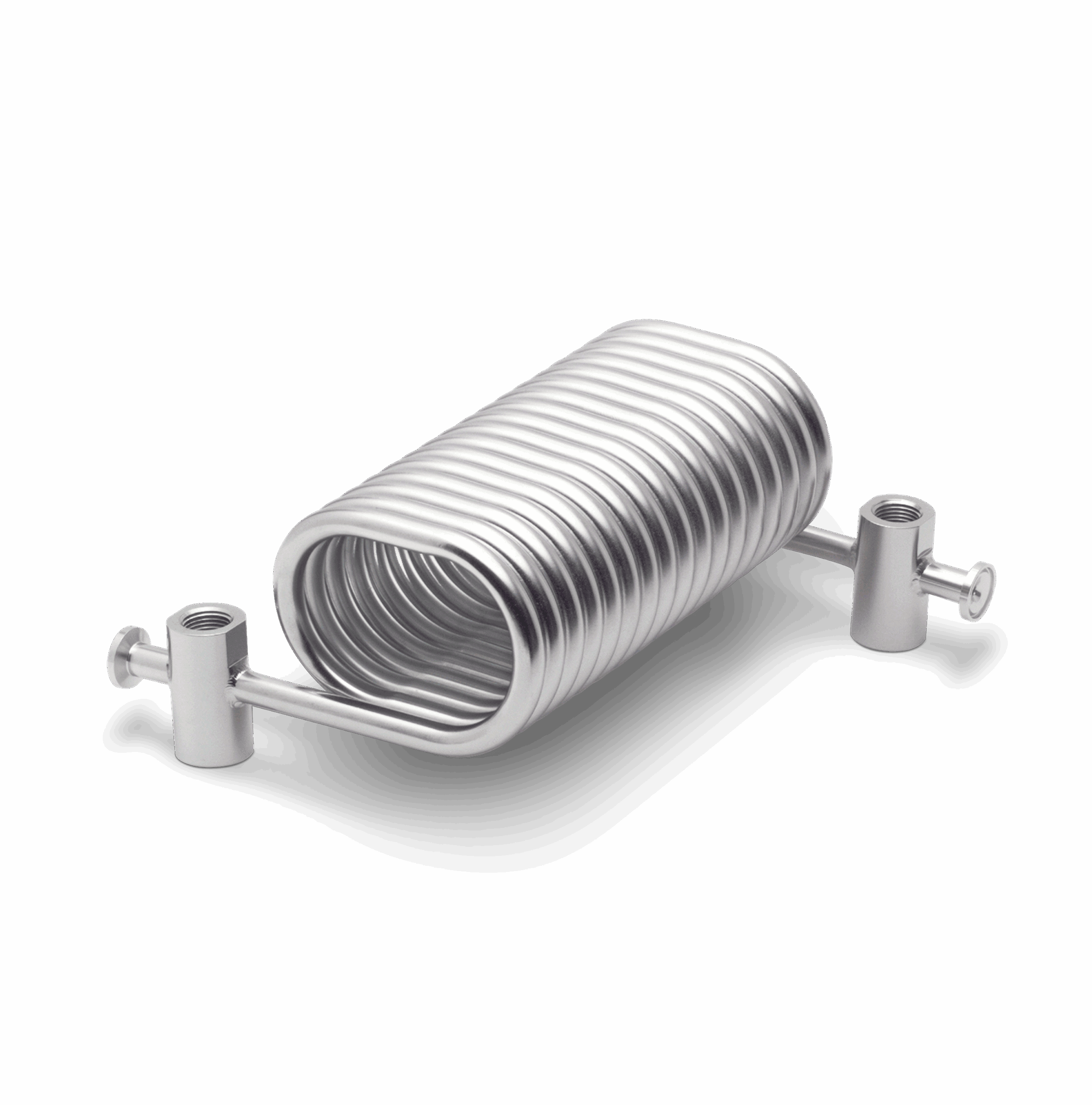
Sanitary Tube-in-Tube
Thermally flexible sanitary design suited for processes with large temperature differentials and conditions that can create stress in more rigid heat exchanger configurations.
- Independent Tube Expansion – Inner and outer tubes expand and contract independently to accommodate differential thermal expansion.
- Thermal Stress Management – Handles demanding thermal stress while maintaining long-term mechanical integrity and reliability.
- Sanitary Flow Path – Low hold-up volume and smooth, cleanable flow paths support hygienic processing and effective CIP/SIP.
- Large Temperature Differentials – Well suited for applications with significant temperature differences and changing process conditions.
Sanitary Design Comparison
Match your process conditions to the right sanitary design.
| Criteria | Sanitary Shell & Tube | Sanitary Tube-in-Tube |
|---|---|---|
|
Design
|
Multi-tube bundle within a shell |
Concentric tube-in-tube design |
|
Heat Transfer Capacity
|
High efficiency performance |
Efficient low-flow heat transfer |
|
Pressure Capability
|
High pressure |
Very high pressure |
|
Hot / Cold Temperature DIfferences
|
Best for applications with limited temperature differentials |
Best for applications with unlimited temperature differentials |
|
Flow Rate
|
Medium to high flows |
Low flows |
|
Cleanability
|
CIP/SIP compatible |
CIP/SIP compatible |
|
Drainability
|
Fully drainable |
Fully drainable |
|
Footprint
|
Compact |
Ultra-compact |
|
Key Benefit
|
High efficiency heat transfer in a small footprint |
High temperature differences with no thermal stress concerns |
Not sure which heat exchanger is right for your application?
Our experts are here to help you find the best solution

Tell us about your process, and our engineers will recommend the best heat exchanger for your performance, pressure, temperature, and space requirements.